Meet the mushrooms
Turkey Tail: The Mushroom With the Striped Rings
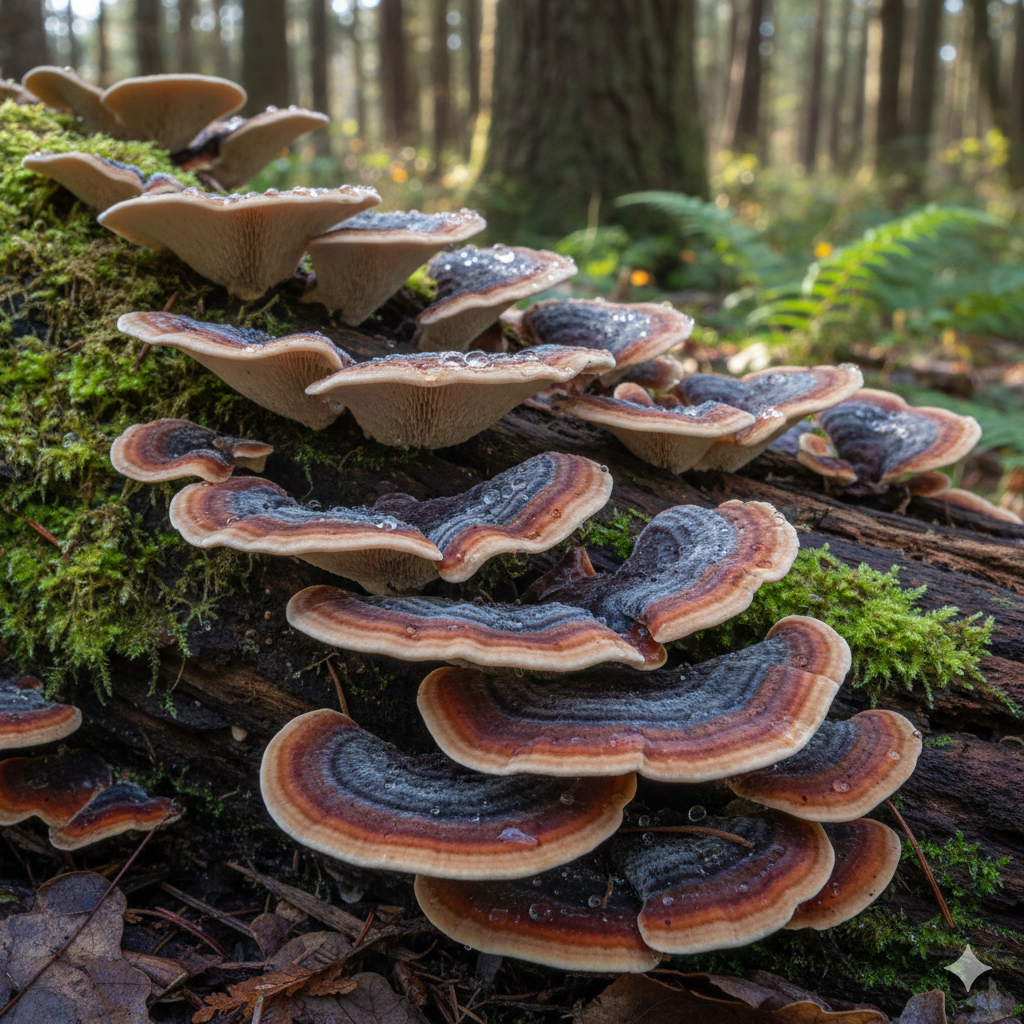
You've probably walked past this mushroom a hundred times. Turkey Tail grows on fallen logs and stumps in forests almost everywhere, and once you know it, you'll spot it on every hike.
Why it's called Turkey Tail
Its thin, fan-shaped caps grow in overlapping rings of brown, tan, rust, gray and sometimes blue, like a wild turkey's tail feathers. Its scientific name, Trametes versicolor, literally means "of many colors."
How to spot the real thing
Flip it over. True Turkey Tail has tiny pores on its underside, like a fine sponge. A common look-alike, called false turkey tail, is smooth underneath. Turkey Tail is also thin and leathery, so it bends instead of snapping.
How it's used
Turkey Tail is too tough to eat like a button mushroom. Instead, people have traditionally simmered it into tea, especially in East Asia. Today it's grown on farms and dried for teas, powders and blends.
Why it's in MycoProtein
Turkey Tail is one of the five mushrooms in every scoop, alongside Shiitake, Lion's Mane, Reishi and Chaga. We use the fruiting body, and it's 100% USA-sourced.
Known for: digestive support.*
Meet the rest of the lineup in Mushroom 101.
*These statements have not been evaluated by the Food and Drug Administration. This product is not intended to diagnose, treat, cure, or prevent any disease.