Meet the mushrooms
Lion's Mane: The Shaggy Mushroom Cooks Love
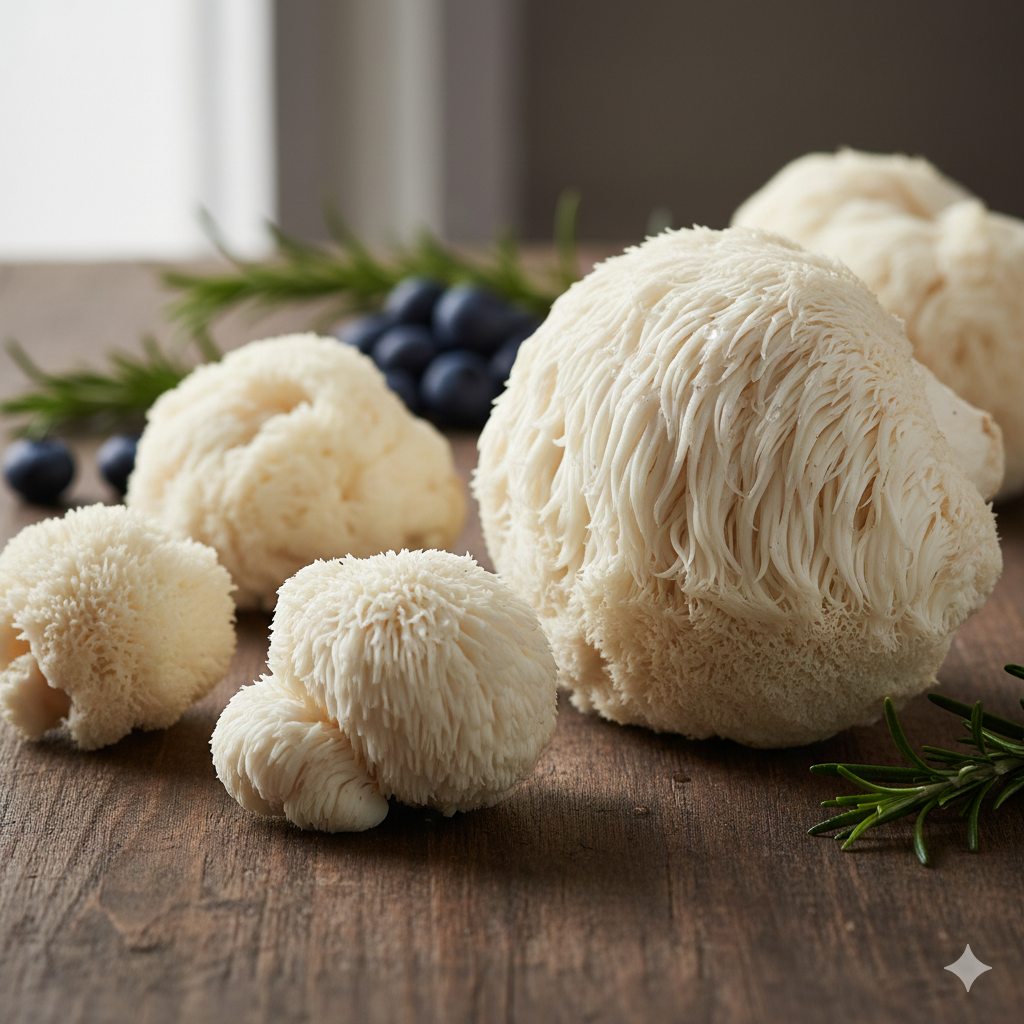
The short version: Lion's Mane is a white, shaggy mushroom with no cap and no gills. It grows as a single clump of soft, dangling spines on hardwood trees, it's a favorite of cooks for its seafood-like texture, and it's one of the five mushrooms in every scoop of ChagaRoot MycoProtein.
That's the gist. The longer story has a "monkey-head mushroom," Japanese mountain monks, a fungus so rare in Britain it's protected by law, and a cooking trick that turns it into "crab" cakes. Pour a coffee. It takes about six minutes.

A mushroom with no cap
Close your eyes and picture a mushroom. You probably see a cap on a stem, with gills underneath. Lion's Mane throws out the whole blueprint.
Instead, it grows as one rounded clump of spines that hang straight down, usually 1 to 4 centimeters long. Think of a frozen waterfall, or a white pom-pom, or a beard made of icicles. A full-grown clump is often about the size of a softball to a small cantaloupe, roughly 8 to 24 centimeters across.
Those spines do the same job gills do on a button mushroom: they're where the spores are made. Hanging them straight down lets the spores drop cleanly into the breeze.
One mushroom, a dozen names
Few mushrooms have collected as many nicknames as this one:
- Scientists call it Hericium erinaceus. Both words mean "hedgehog" in Latin. A hedgehog-hedgehog.
- In English it's lion's mane, bearded tooth, pom-pom mushroom, satyr's beard and tree hedgehog.
- In China it's houtougu, the "monkey-head mushroom."
- In Japan it's yamabushitake, named after the yamabushi, Japan's wandering mountain monks.
A lion, a hedgehog, a monkey and a monk. Same mushroom.
Where it grows
Lion's Mane is native to North America, Europe and Asia. In the wild, it grows on hardwood trees, especially oak, beech and maple. It often appears on dead trunks, and sometimes on living trees, usually right where the bark has been wounded.
Look for it in late summer and fall, or over winter and spring in warmer places. It usually grows alone or in pairs, so one sighting can feel like a lucky find.
How to tell it apart
- One clump, no branches. Lion's Mane is a single, unbranched ball of spines. Its close cousins in the Hericium family hang their spines from branches, more like coral.
- Long, dangling spines. On a mature one, most spines are more than a centimeter long.
- White, then yellowing. It starts bright white and turns yellowish or brownish as it ages. Cooks look for the white ones.
No cap, no gills, no stem. Just a waterfall of white spines, and one of the most-loved mushrooms in the kitchen.
So rare in Britain, it's protected by law
Lion's Mane is easy to buy, but it's not always easy to find in the wild. It's red-listed in several European countries because its spores don't establish easily.
In the UK, it was added to Schedule 8 of the Wildlife and Countryside Act in 1998. It's one of only four fungi on that list, which means it's illegal there to pick or damage it in the wild without a license. Its stronghold is old beech woods in southern England, especially the New Forest.
Why cooks love it
Lion's Mane is one of the few mushrooms in our lineup that's also a great eating mushroom. Fresh, it has a mild, slightly sweet flavor, and cooks often compare it to crab, lobster or scallops. The texture is tender and a little chewy, closer to seafood than to a button mushroom.
Here's the classic way to cook it:
- Keep it dry. Brush it clean instead of rinsing. It soaks up water like a sponge, and a waterlogged Lion's Mane turns soggy.
- Tear, don't slice. Pull it apart into thick pieces along the grain of the spines.
- Press and brown. Put the pieces in a hot, dry pan and press them down with a spatula to squeeze out moisture. Cook until both sides are golden.
- Finish. Add butter (or olive oil), garlic and salt in the last minute. Some cooks also shred it, mix it with breadcrumbs and egg, and make "crab" cakes.
From the forest to the farm
For a long time, Lion's Mane was something you found, not something you grew. Growers in China reported cultivating it in 1988, and today it's grown widely on logs and on bags of hardwood sawdust, then harvested fresh or dried. That's how farm-grown Lion's Mane ends up at the market, and in your scoop.
Lion's Mane in MycoProtein
ChagaRoot MycoProtein starts as pea and rice protein, fermented with Shiitake mycelium. Then four more mushrooms join in, and Lion's Mane is one of them. We use the fruiting body (the shaggy part you'd see on the tree), and it's 100% sourced in the USA.
It won't make your shake taste like crab, we promise. You taste Chocolate or Vanilla. (For how it all comes together, read What Does MycoProtein Mean?)
Meet Lion's Mane's teammates
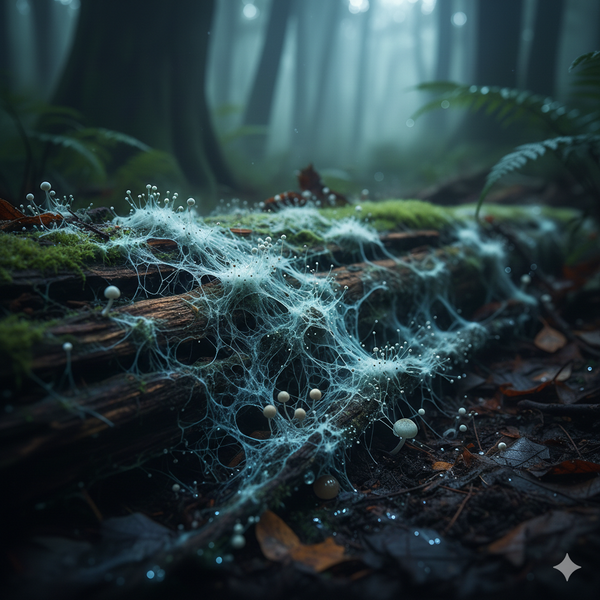
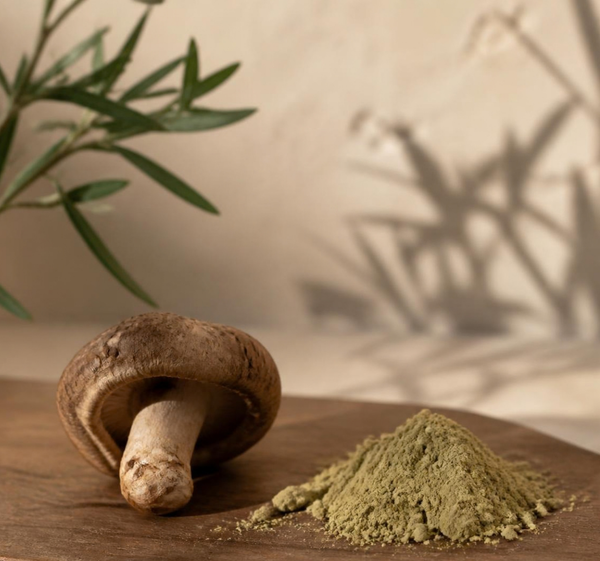
Shiitake. The fermenter. Its mycelium works on the pea and rice protein the way a starter works on sourdough. More on mycelium.
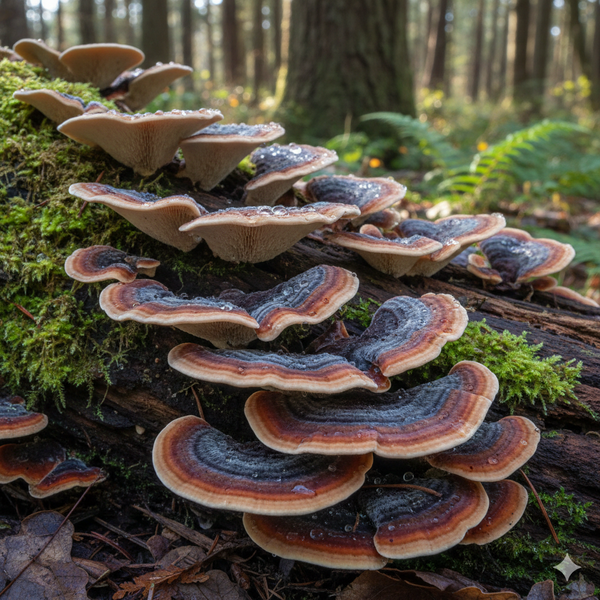
Turkey Tail. Thin, fan-shaped caps striped like a turkey's tail feathers. More on Turkey Tail.
Reishi. A glossy, reddish-brown shelf mushroom that looks like it's been lacquered.
Chaga. Our namesake. A black, cracked lump on birch trees that looks like burnt charcoal. More on Chaga.
What's in a scoop
- 20g of plant protein in Chocolate, 19g in Vanilla, per 2-scoop serving
- A complete protein, with a PDCAAS (Protein Digestibility-Corrected Amino Acid Score) of 1.0, the highest score possible
- Five mushrooms: Shiitake, Lion's Mane, Reishi, Turkey Tail and Chaga, all 100% USA-sourced
- Sweetened only with monk fruit and allulose. No stevia, no sucralose, no added sugar and no artificial sweeteners.
- Vegan, gluten free and non-GMO
Common questions
Can I eat Lion's Mane?
Yes. It's a popular edible mushroom, and many grocery stores and farmers markets sell it fresh. If you find one in the wild, have an expert confirm it before eating, and leave it be in places where it's protected.
Does it really taste like crab?
Cooked the right way (dry pan, pressed, browned), the texture is surprisingly close. The flavor is mild and a little sweet, so it takes on whatever you cook it with.
Why does Lion's Mane turn yellow?
That's just age. Fresh Lion's Mane is bright white and slowly yellows or browns as it matures.
Is MycoProtein vegan?
Yes. Mushrooms are fungi, not animals. MycoProtein is vegan, gluten free and non-GMO.
Try it
Stir it into your morning coffee, blend it into a smoothie or bake it into breakfast. A few to start with: Protein Mocha, Vanilla Chai Smoothie, Protein Pancakes, or browse all our recipes.
Curious how it stacks up against whey, plant and pea protein? See how MycoProtein compares. Want to meet all five mushrooms side by side? Head to Mushroom 101. Ready to try it? Shop MycoProtein in Chocolate or Vanilla.
*These statements have not been evaluated by the Food and Drug Administration. This product is not intended to diagnose, treat, cure, or prevent any disease.